


Our outlook for 2027
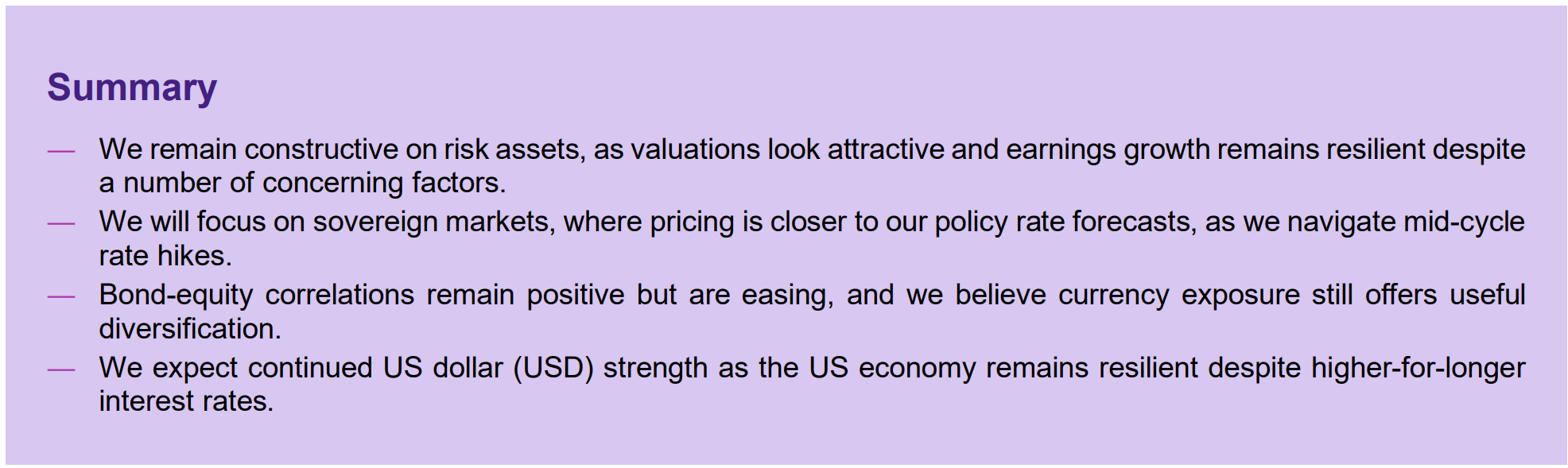
The defining macro themes of 2026 were renewed inflation and a sharp repricing of interest rate expectations. Escalating conflicts across the Middle East involving Iran, the US, Yemen and Saudi Arabia have kept energy prices elevated and complicated the disinflationary outlook. Persistent inflation has shifted expectations away from monetary easing towards tighter policy, prompting markets to reprice towards a higher-for-longer rate environment and pressuring global bond markets. We expect this trend to continue into 2027 with global central banks remaining in a rate-hiking cycle. Despite facing headwinds in 2026, equities have remained resilient and delivered positive returns, as robust earnings growth has allowed investors to look beyond the near-term impact of higher energy prices and interest rates. The recent market correction has also compressed multiples, bringing valuations back towards more compelling levels, which we expect will provide a more conducive investment backdrop into 2027.
Growth assets: speed bumps, not roadblocks
Despite volatility surrounding the ongoing Middle East conflict, the MSCI All Country World Index (ACWI) rose over 10% year to date as of 11 November 2026. US equity markets hit all-time highs in early October before sentiment weakened on the back of soft initial public offerings (IPOs) by neocloud providers and widening credit spreads. The Democratic “Blue Sweep” at the US midterm elections also clouded the outlook for artificial intelligence (AI) capital expenditure (capex), given the party’s indications that new data centres could be subject to tighter construction regulations.
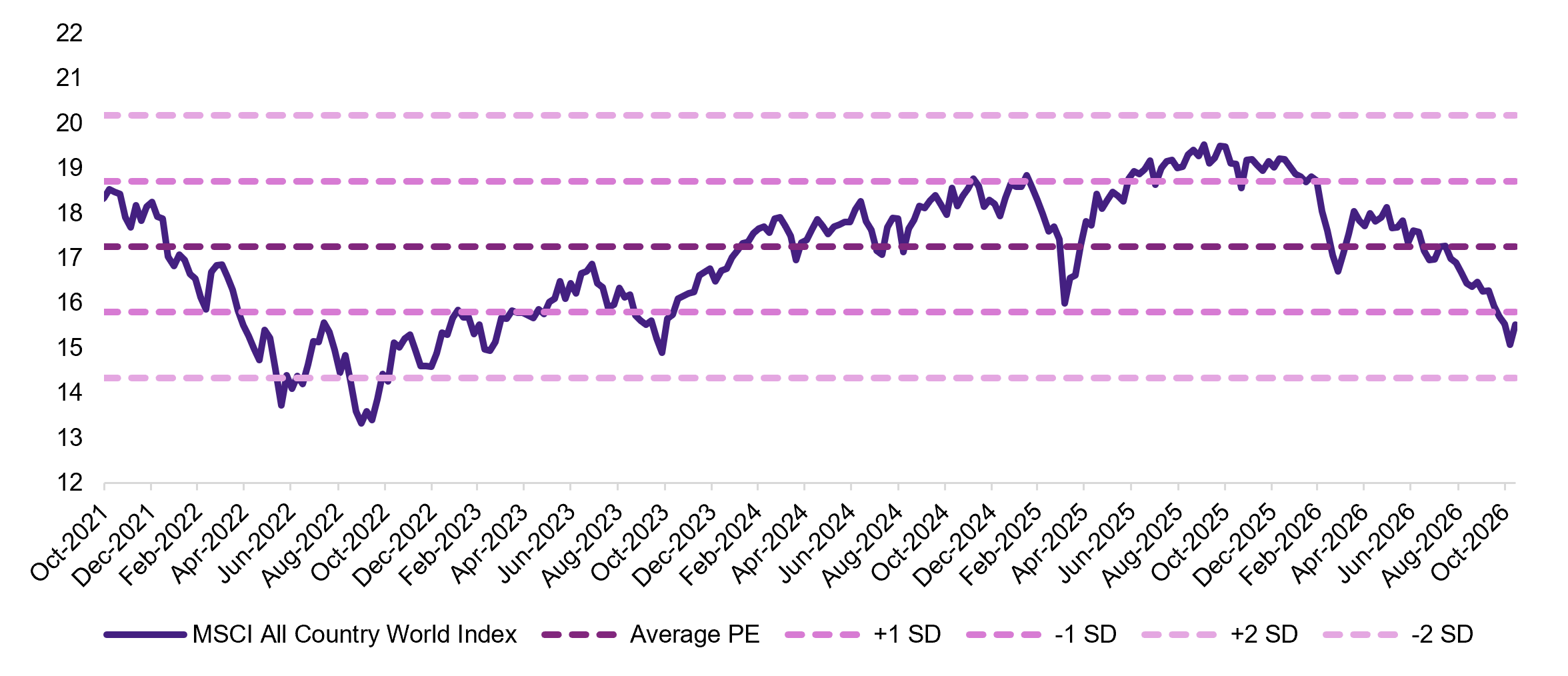
On the other hand, earnings growth has surprised to the upside, with guidance revised higher as AI-related capex continues to drive most of the growth. As a result, price-to-earnings (P/E) ratios have corrected significantly and the MSCI ACWI now trades at 15 times forward earnings, around one standard deviation below its five-year historical mean. With earnings expected to rise more than 30% year-on-year (YoY) over the next 12 months, valuations look increasingly compelling.
Chart 1: MSCI All Country World Index forward P/E trades below its five-year historical mean
Source: Amova Asset Management, Bloomberg, November 2026
Equity markets can perform well in an inflationary scenario, as corporate sales and earnings are measured in nominal terms. As long as earnings grow, equities should remain supported. In terms of earnings, 2026 has been an exceptional year, with the markets experiencing some of the strongest earnings growth seen during a mid-cycle economic expansion, largely driven by strong AI capex. Earnings growth of such magnitude is normally only experienced when companies are emerging from recessions.
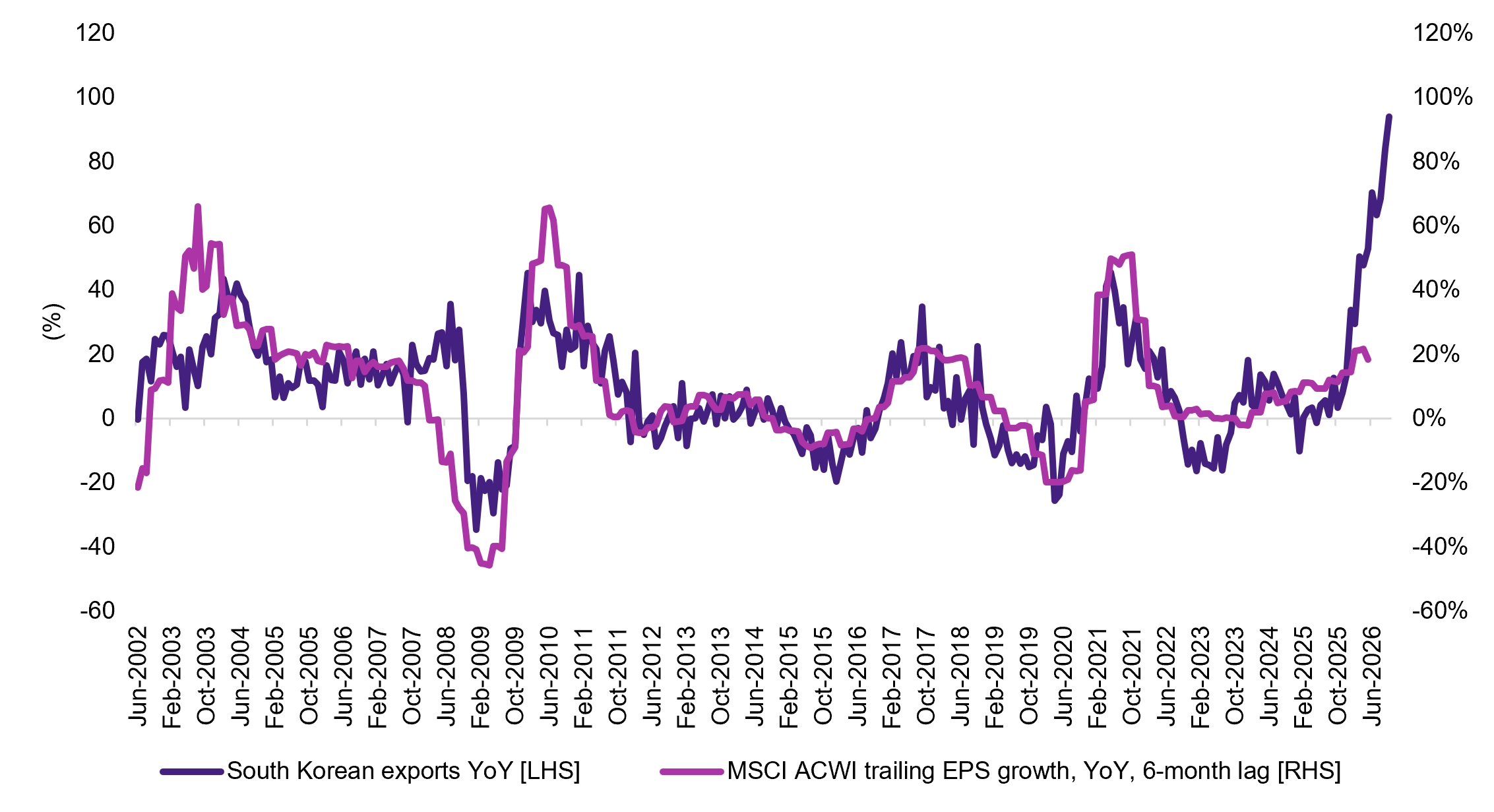
Higher memory prices made a particularly strong contribution to earnings growth, helping companies in the memory sector report record profits. This strength is also reflected in South Korean exports, which provide a useful gauge of the global technology cycle. In addition, higher oil and gas prices as a result of the Middle East conflict led to significant upward revisions to earnings estimates in the energy sector. Looking ahead, we expect earnings growth to moderate as many of these one-off factors fade. Nevertheless, global earnings may still grow by more than 30% in 2027, offering a favourable risk-reward profile for global equities.
Chart 2: South Korean exports YoY vs MSCI ACWI earnings growth
Source: Amova AM, Bloomberg, November 2026
While earnings growth and resilient economic expansion may continue to provide firm support for equities, we believe questions regarding AI-related capex will return to the forefront in 2027. With investment already at very high levels, investors are likely to focus increasingly on whether this spending can generate sufficient returns. Investors are also likely to question the sustainability of further capex financing via the issuance of shares and debt as credit spreads indicate that markets are demanding more compensation. This raises questions over whether hyperscalers and AI developers such as OpenAI and Anthropic can continue to fund their spending through debt and equity, as well as whether the revenues generated will justify the scale of their spending. Successful AI-related IPOs could help allay some of these fears.
As we try to diversify our sources of returns, we are looking at markets outside of the US for non-AI related investment themes. Markets such as Canada and the UK offer exposures to sectors such as financials, energy, materials, healthcare and staples. These markets could offer alternatives to the technology-heavy US market, providing more defensive positionings and attractive dividend yields.
Bonds, inflation and the Fed
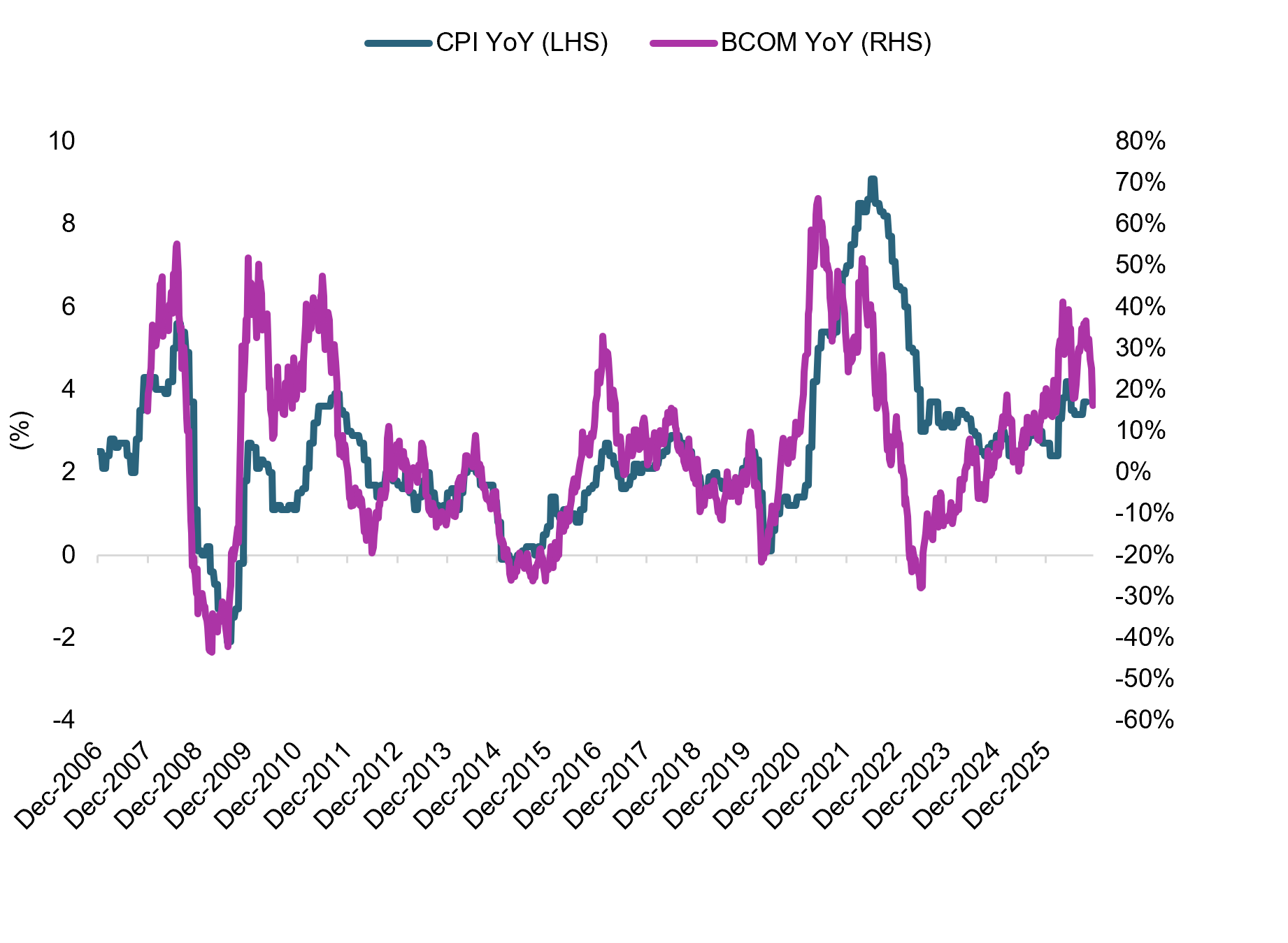
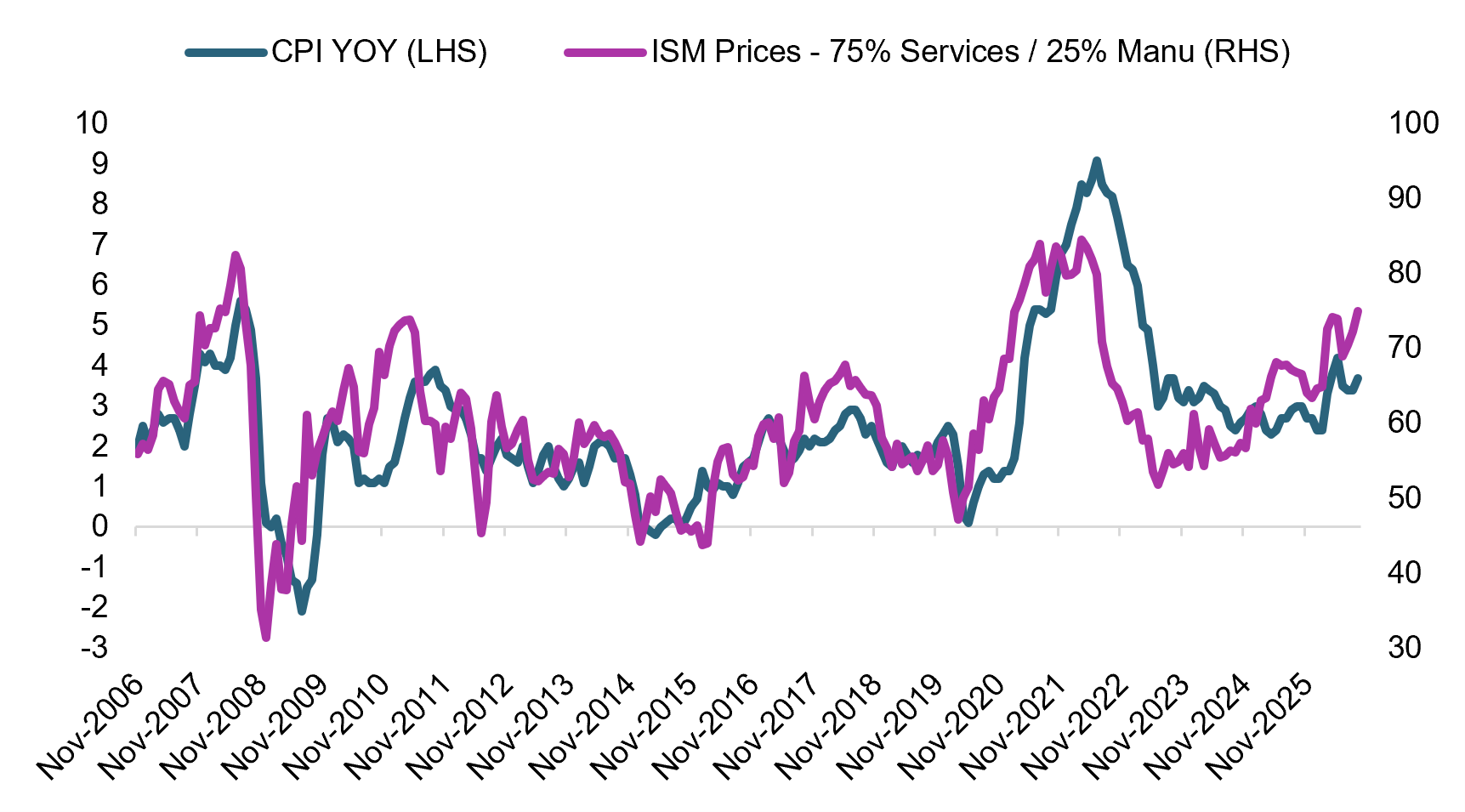
On the defensive side of the portfolio, persistent inflationary pressures are likely to keep central banks on alert and monetary policy restrictive into 2027. In 2026, constrained supply alongside resilient demand created a persistently inflationary environment. Geopolitical tensions and trade tariffs led to supply constraints and kept commodity prices high, while robust demand from AI-related capex, expansionary fiscal policies and resilient consumer spending enabled producers to pass through higher input costs. Heading into 2027, the Blue Sweep could constrain fiscal spending and reduce geopolitical and trade-related risks, but other growth drivers remain resilient and are likely to keep inflation elevated. Our key inflation leading indicators, US ISM prices and commodity prices (Charts 3 and 4), remain high, pointing to persistent inflationary pressures in the near term. That said, the Federal Reserve (Fed)’s hawkish stance and rising bond yields are pushing borrowing costs higher, which may increasingly weigh on growth and warrants close monitoring.
Chart 3: Commodity prices (Bloomberg Commodity Index) and US inflation
Source: Amova AM, Bloomberg, November 2026
Chart 4: US ISM prices (75% services, 25% manufacturing) and inflation
Source: Amova AM, Bloomberg, November 2026
Additionally, outside the US, most central banks have pivoted towards rate-hiking cycles, with markets pricing in a further two to four rate increases across most economies. Australia remains an exception, having already undergone a more aggressive hiking cycle in 2026. Against this backdrop, we expect yield curves to continue flattening into 2027. We therefore remain focused on sovereign markets where 10-year yields have reached our forecast ranges, with the US and UK among our areas of interest.
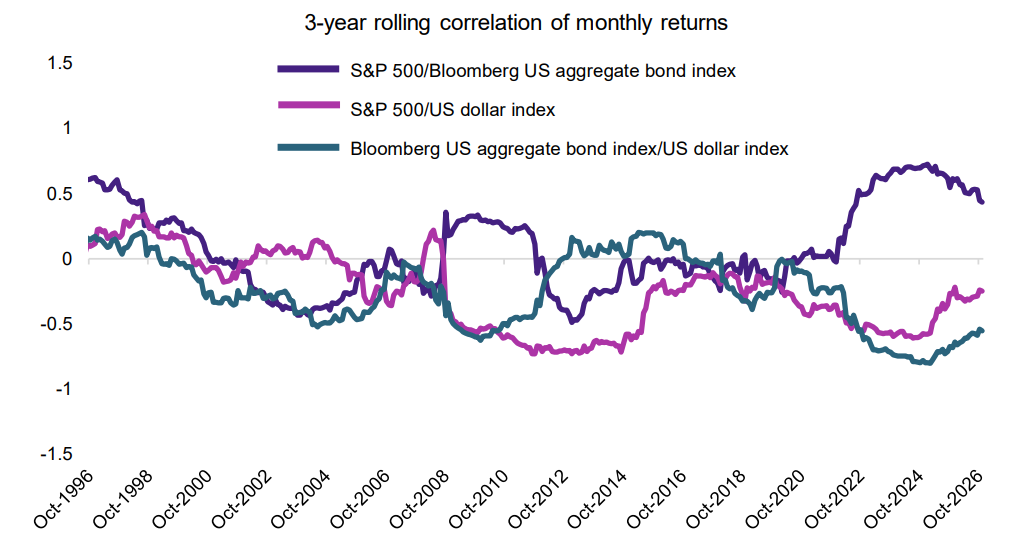
Since 2022, the correlation between bonds and equities has been strengthening, reducing the benefits that diversification offers. For multi-asset portfolios, this means long-dated bonds can amplify volatility instead of providing the benefits usually associated with such diversification. While a positive correlation can be positive when markets are rising, any market downturn will be felt quickly. However, correlation between the two asset classes has been decreasing in recent months. Long-dated bonds have rallied on safe-haven demand as equities corrected on the back of AI capex concerns, suggesting that bonds may be regaining some of their diversification benefits. The US dollar, meanwhile, continues to be negatively correlated with risk assets and provides an additional source of diversification. We therefore believe the dollar can provide protection against hawkish interest rate movements that could weigh on both equities and bonds.
Chart 5: Bond-equity correlation remains positive but is easing, offering greater diversification potential
Source: Amova AM, Bloomberg, November 2026
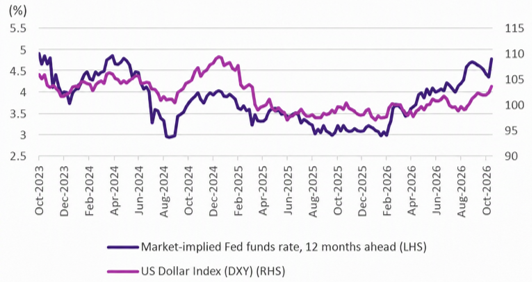
Since the Fed’s last rate hike in 2022, the dollar has broadly followed market expectations for where the policy rate will be 12 months ahead. With a new Fed mid-cycle hiking phase under way, the question is whether the greenback can retain its upward trajectory. Given our expectation that US inflation will stay elevated and the Fed will keep the policy rate above 4% in the next 12 months, we believe the dollar will remain resilient and continue to benefit from positive carry against other currencies. The dollar’s negative correlation with broader financial assets also provides valuable portfolio diversification, while its safe-haven status can offer protection against geopolitical risks.
Chart 6: Can the dollar keep its upward trajectory with higher rates?
Source: Amova AM, Bloomberg, November 2026
Conclusion
Overall, we remain cautiously optimistic as we approach 2027. We expect attractive valuations, coupled with strong earnings growth, to provide a favourable investment backdrop into 2027. The ride is likely to be bumpy, with persistent inflationary pressures and rate hikes by central banks. However, we view these challenges as speed bumps rather than roadblocks and expect to see risk assets to trend higher over the coming 12 months. Against this backdrop, we continue to seek contributions from various asset classes through diversification and prudent risk management.